This series covers:
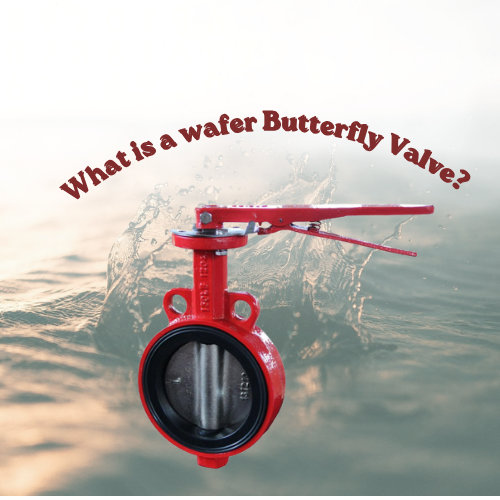
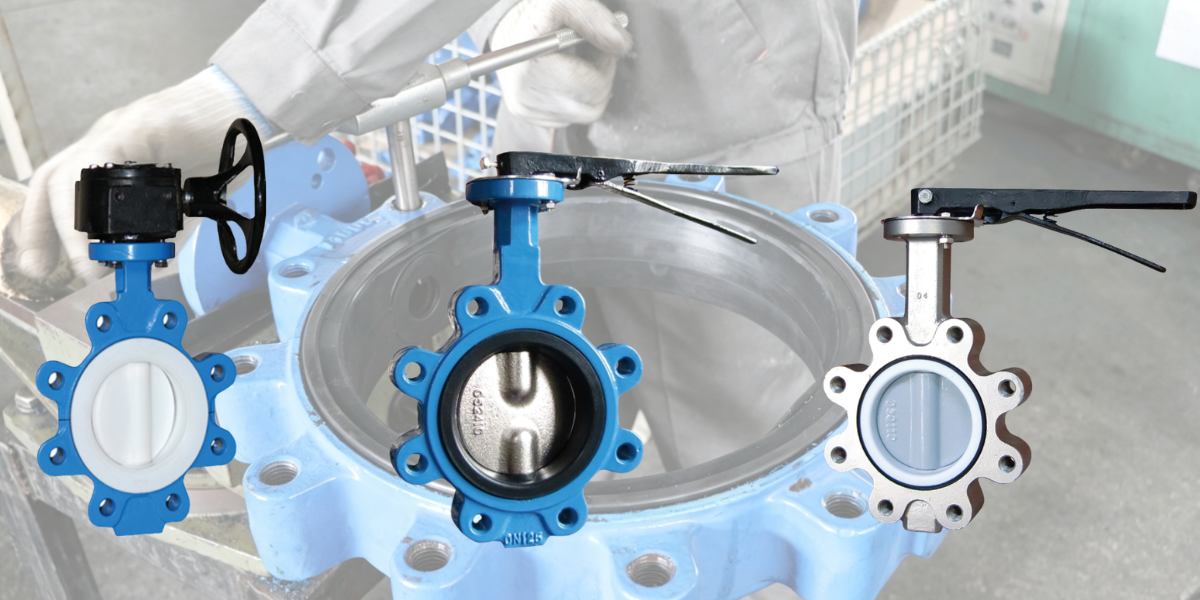
A lug butterfly valve is a butterfly valve with a body that has threaded inserts (lugs) on both flange faces. These lugs allow pipe flange bolts to be threaded directly into the valve body on each side independently, enabling several critical advantages over wafer-type valves.
The defining feature of a lug butterfly valve is that the bolts on one side of the valve can be installed or removed independently of the bolts on the other side. This means the downstream pipe can be disconnected while the valve remains bolted to the upstream pipe, maintaining system integrity and enabling dead-end isolation.
Lug butterfly valves are the standard choice for terminal isolation, maintenance teardown points, and applications where piping on one side of the valve must be removed while the other side remains pressurized.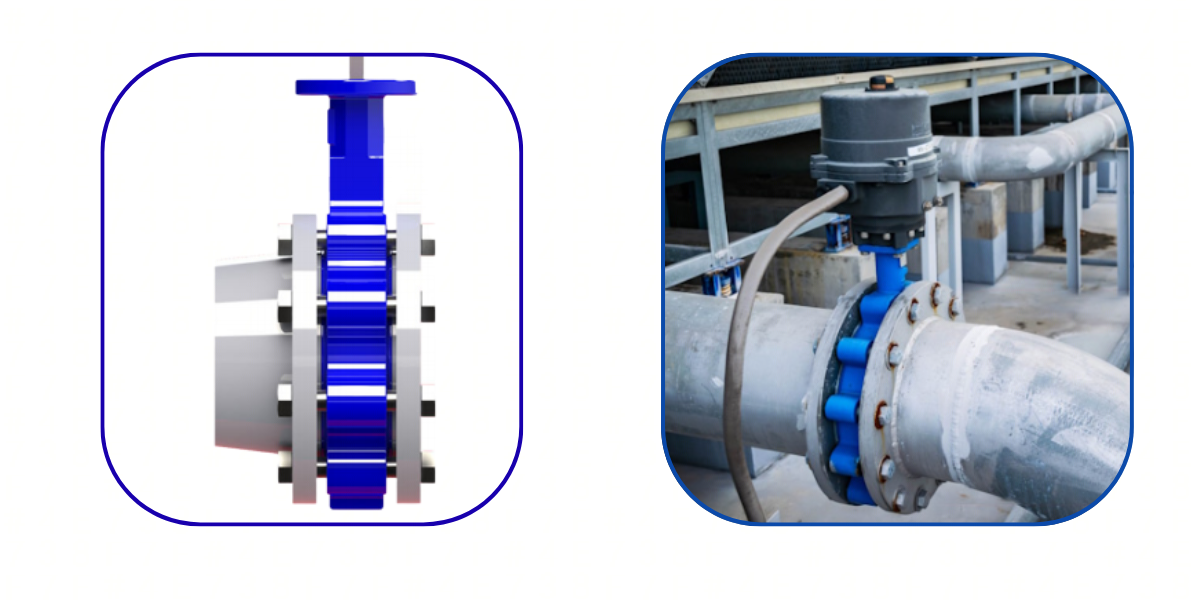
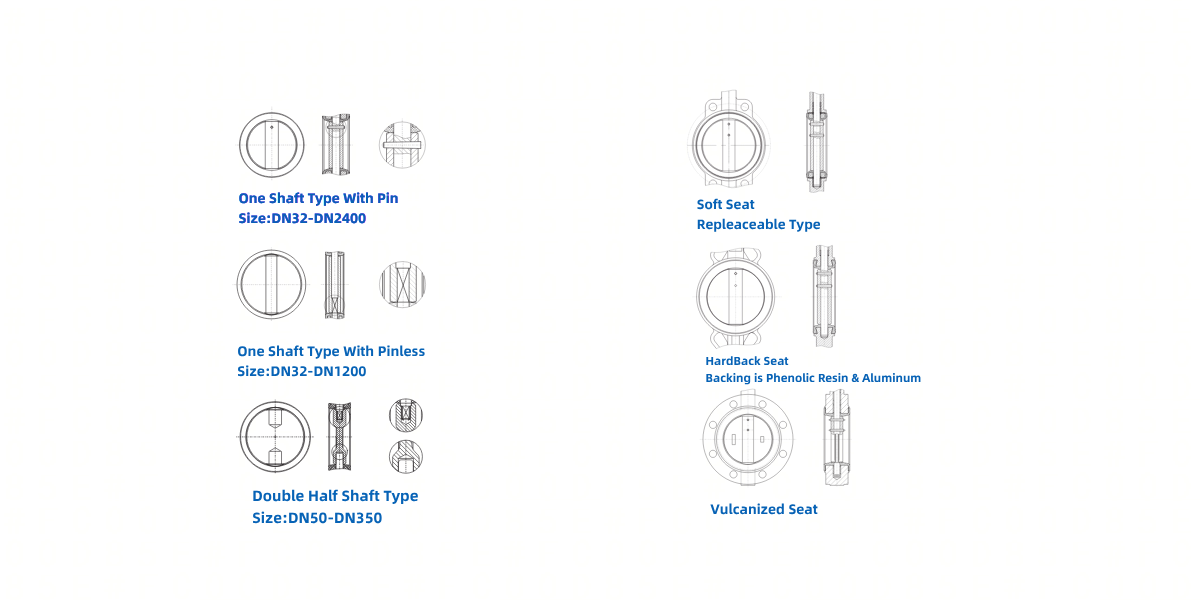
Lug butterfly valves use the same seat types as wafer valves:
The lug butterfly valve operates on the same quarter-turn (90 deg) principle as all butterfly valves:
When closed, the disc is perpendicular to flow, sealing against the resilient seat. When open (90 deg rotation), the disc aligns parallel to the pipe wall for minimal flow restriction. The fundamental difference from a wafer valve is not in the operating principle but in how the valve is mounted and what it can do in terms of system isolation.
The key operational advantage of the lug design is dead-end service capability: the valve can hold full rated pressure from one side while the other side has no pipe connected. This is possible because the bolts on the pressurized side are threaded into the valve's lugs and remain securely engaged even when the opposite flange is removed.
The most important distinguishing feature of a lug butterfly valve is its ability to provide dead-end service. Understanding what this means and why it matters is essential for proper valve selection.
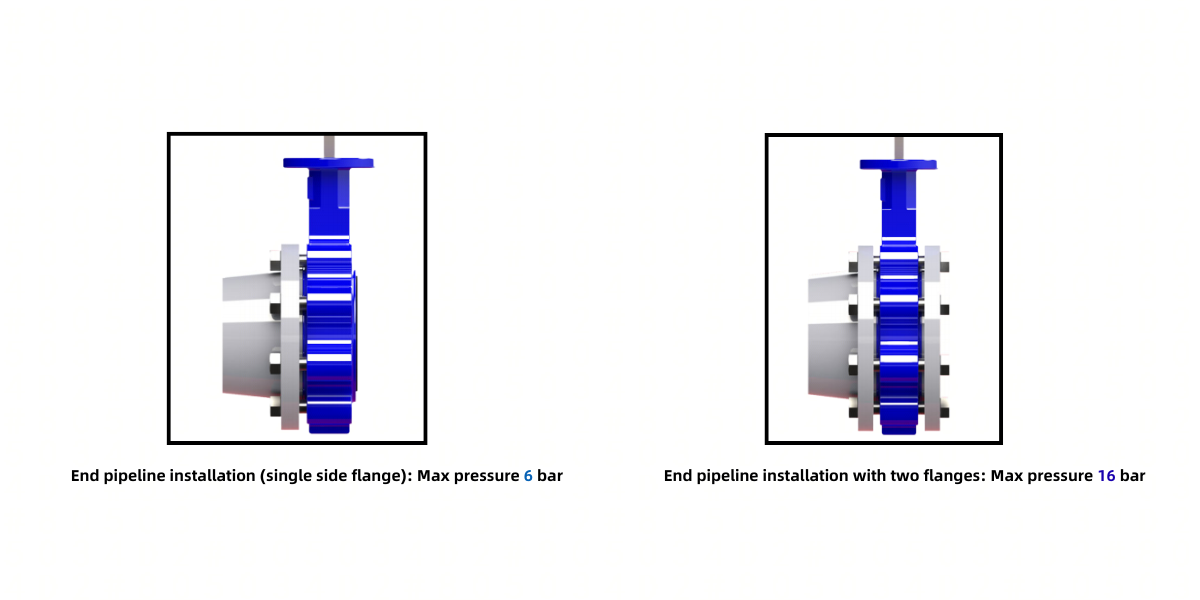
Dead-end service refers to the condition where a valve is installed at the termination of a pipeline, with piping only on one side. The valve must hold the full system pressure from the connected side while the other side is open to atmosphere or connected to equipment that may need removal.
A wafer valve relies on both pipe flanges to clamp it in place. If one flange is removed:
Since lug and wafer valves share the same face-to-face dimensions, seat types, and disc designs, the choice between them is primarily driven by installation requirements and system maintenance needs.
| Feature | Lug Type | Wafer Type (Part 1) |
| Bolting Method | Independent – each side bolts into valve lugs | Through-bolts – long bolts pass through valve and both flanges |
| Dead-End Service | Yes – rated for full pressure dead-end | No – not suitable for dead-end |
| Pipe Removal | Downstream pipe can be removed without draining upstream | Both flanges must be unbolted – requires draining both sides |
| Cost | +15-25% over wafer (more material, threaded lugs) | Lowest cost option |
| Weight | 15-30% heavier than wafer (lug material adds weight) | Lightest option |
| Face-to-Face | Same short pattern as wafer (EN 558 Series 20) | Shortest (EN 558 Series 20) |
| Ideal For | Pipe ends, pump discharge, tank outlets, maintenance teardown points | Continuous pipelines, general isolation, cost-sensitive projects |
This is the most common application for lug butterfly valves. At each pump discharge in a multi-pump station, a lug valve provides positive isolation for pump removal. When a pump needs servicing, the discharge lug valve is closed, the downstream pipe is unbolted from the valve, and the pump can be removed. The lug valve holds the system pressure while the pump is off-line. For a typical water booster station handling 500-5000 GPM at 100-200 psi, lug butterfly valves on each pump discharge are standard practice.
Lug valves are installed directly on tank outlet nozzles, providing dead-end isolation at the tank connection. This allows the downstream piping to be drained or modified without draining the tank. For elevated water storage tanks, the lug valve at the tank outlet is often the primary isolation point for the entire distribution system.
In fire protection systems, lug valves are specified for fire pump suction lines where the pump must be removable for servicing. The lug valve on the suction side isolates the pump from the water source while maintaining the suction piping integrity.
In HVAC plants, lug valves are installed at chiller and heat exchanger connections to allow individual unit removal without draining the entire system. For a central chiller plant with multiple 500-ton chillers, lug valves on each chiller supply and return connection enable seasonal maintenance while other chillers remain operational.
Lug valves isolate individual filter cells in multi-filter banks. When a filter needs media replacement or underdrain maintenance, the inlet and outlet lug valves isolate that filter while adjacent filters continue producing water.
Lug valves provide maintenance isolation for compressors, pumps, pressure vessels, heat exchangers, and other process equipment that must be periodically removed for inspection or repair.
| Standard | Relevance to Lug Valves |
| API 609 Category A | Concentric lug butterfly valves for industrial dead-end service |
| AWWA C504 | Rubber-seated lug valves for waterworks, including dead-end testing |
| EN 593 | European standard – covers lug valve design and testing |
| EN 558 Series 20 | Face-to-face dimensions – same short pattern as wafer for lug valves |
| ASME B16.5 / EN 1092-2 | Flange drilling dimensions – lug pattern matches standard flange bolt circles |
A lug valve has threaded inserts (lugs) on both flange faces for independent bolting, enabling dead-end service and independent pipe removal. A wafer valve has through-holes and requires both flanges for clamping, making it unsuitable for dead-end service. Lug valves cost 15-25% more than wafer valves.
Yes. This is the primary advantage of the lug design. When the downstream flange is removed, the upstream bolts remain threaded into the valve body lugs, retaining the valve and holding system pressure. Most lug valves are rated for full-pressure dead-end service from either direction.
Yes. Concentric resilient-seated lug valves with vulcanized seats provide bubble-tight shut-off in both flow directions. This is essential for dead-end service where pressure acts from the connected side only.
Lug butterfly valves are commonly manufactured from 2 in (DN50) to 48 in (DN1200). Above 24 in, bevel gear operators are typically specified due to the high torque required. Above 48 in, double flange butterfly valves are more common.
Most common: ASME Class 150 (275 psi / 19 bar at 100 F)is available for higher pressure applications. European ratings: PN10 (10 bar), PN16 (16 bar),. The dead-end pressure rating is the same as the full bi-directional rating in most designs.
Yes. The bolts must be the correct length to achieve full thread engagement in the valve lugs without bottoming out. For ASME Class 150 lug valves, standard bolt lengths are specified by the manufacturer. Bolts should be grade B7 (carbon steel) or B8 (stainless steel) for corrosive environments. Thread lubricant is recommended to prevent galling, especially with stainless steel bolts in stainless steel lug inserts.
Yes. This is a standard application. The lug valve bolts directly to the tank outlet flange, and the downstream piping connects to the other side. The valve can be closed and the downstream pipe removed while the tank remains full. For water storage tanks, the outlet lug valve is often the most critical isolation point in the distribution system.
For pricing, technical datasheets, dimensional drawings, or engineering assistance selecting the right lug butterfly valve for your project:
Email: james@lauxvalve.com | Tel: +86 18920833829 | Website: lauxvalve.com
With over 15 years of manufacturing experience, ISO 9001 & CE certification, advanced production facilities, and global export expertise, Laux Valve provides reliable butterfly valve solutions supported by professional engineering and responsive customer service.


