Welcome to Part 3 of the Butterfly Valve Types Series from Laux Valve. In Part 1, we covered the economical wafer butterfly valve. In Part 2, we examined the lug butterfly valve with its dead-end capability. In this third installment, we explore the double flange butterfly valve — the most robust butterfly valve configuration, designed for heavy-duty isolation, the most demanding industrial and waterworks applications.
This series covers:
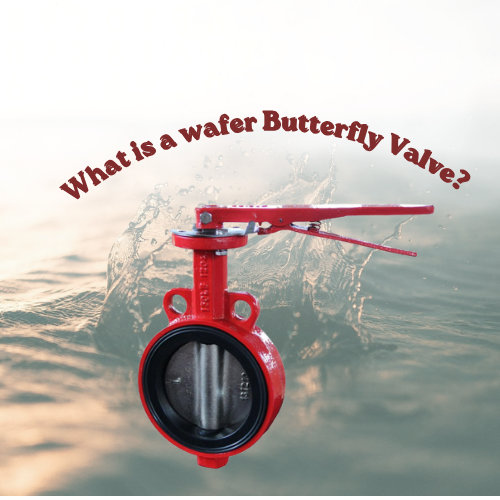
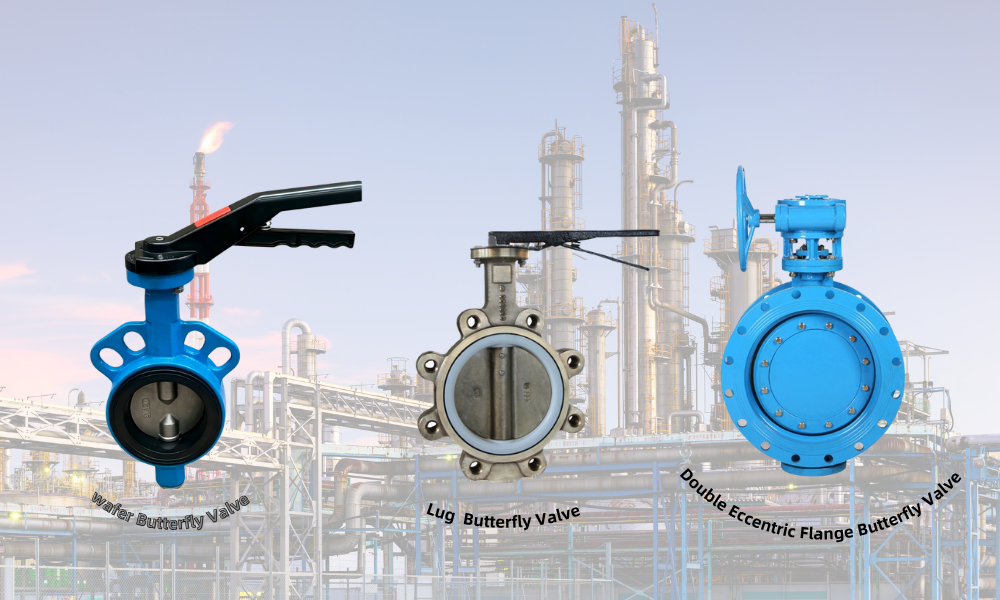
- Part 1 – Wafer Butterfly Valve – Compact, economical, requires both flanges
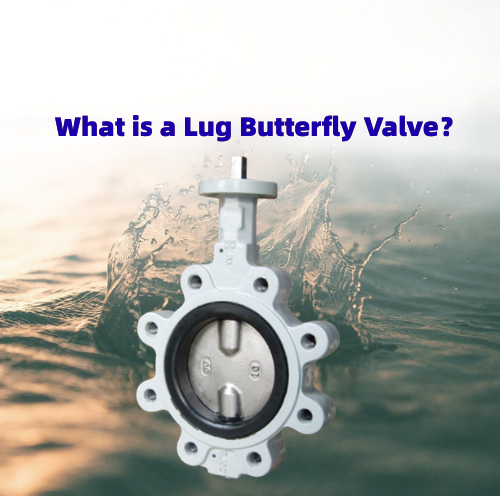
- Part 2 – Lug Butterfly Valve – Independent bolting, dead-end capability
- Part 3 – Double Flange Butterfly Valve ← You are here
1. What is a Double Flange Butterfly Valve?
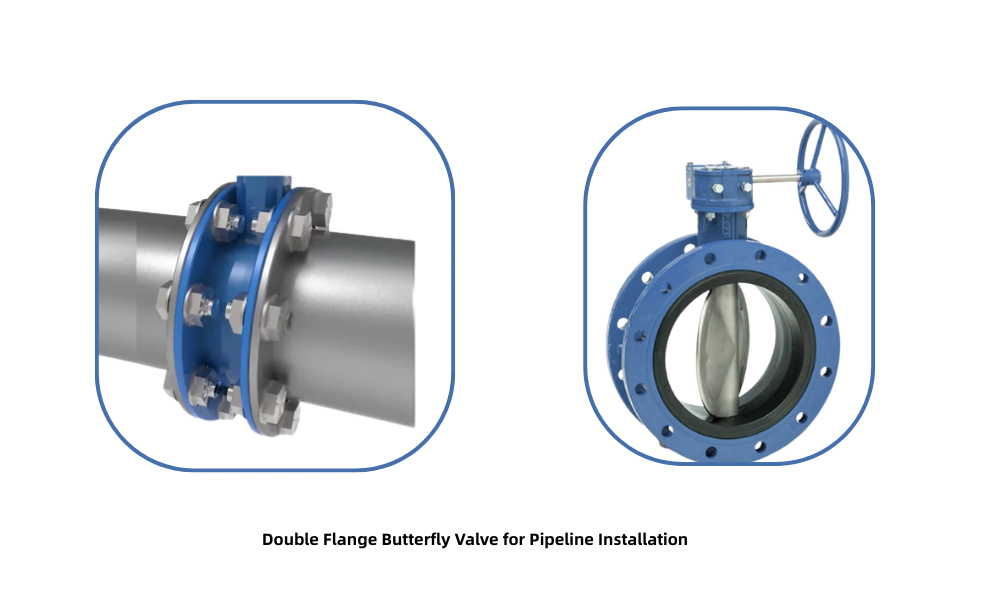
A double flange butterfly valve is a butterfly valve with integral flanges cast or machined onto both ends of the valve body.
The double flange design is the strongest and most rigid butterfly valve configuration. It is the preferred choice for:
- Critical isolation applications where reliability is paramount
- Applications requiring the valve to be independently supported
- Dead-end service at high pressures
- AWWA C504 Class 125B / 250B waterworks applications
The integral flanges provide a rigid, gasketed connection that can withstand higher bending moments, thermal stresses, and pressure loads than wafer or lug designs. This makes the double flange valve the standard choice for transmission mains, pump stations, and critical process isolation.
-
Installation Guidelines
- Mounting can be performed at any angle; sufficient space must be reserved for operation, inspection and component replacement. Bi-directional flow is allowed with no mandatory flow direction marking.
- Storage requirement: Keep the disc slightly open at 15° before installation and store in a dry warehouse environment.
- Pre-installation inspection: Verify parameter compatibility with working conditions, clean the sealing surface of the disc, and confirm secure connection between actuator and valve stem.
- Assembly tips: Tighten flange bolts evenly; fully open the valve during pipeline hydrostatic testing.
- Routine maintenance checklist: Inspect seat/O-ring damage, sealing performance and smooth operation without jamming. Re-run leakage testing and retain service records after maintenance.
2. Key Characteristics
2.1 Flanged Body Design
- Integral flanges on both ends – The body is cast with full flange faces on both the upstream and downstream sides. Flange faces are machined to ASME B16.5 raised face (RF) or EN 1092-2 flat face (FF) standards.
- Long face-to-face dimension – The double flange body has the longest face-to-face of any butterfly valve type. For example, a 10 in Class 150 double flange valve has a face-to-face of approximately 178 mm (7.0 in), compared to 52-65 mm for wafer or lug types of the same size. The longer body provides greater structural rigidity and allows the body to accommodate higher pressure ratings.
- Lower bolt holes – Flange bolt holes are cast or machined into the integral flanges, matching standard pipe flange drilling patterns (ASME B16.5, EN 1092-2, AS 4087, or JIS B2220).
- Gasket surfaces – Flange faces are machined with standard gasket finishes (125-250 AARH for raised face, smooth finish for flat face). Separate flange gaskets are always required.
- Independent support possible – The valve can be independently supported by its flanges or by body support legs, reducing pipe loading on large valves.
2.2 Seat Design
Double flange butterfly valves are available with several seat configurations depending on the application:
- Vulcanized (bonded) rubber seat – EPDM or NBR bonded to the body. Standard for AWWA C504 waterworks valves. Provides bubble-tight shut-off for water and wastewater service.
- Cartridge (replaceable) seat – Mechanically retained rubber liner. Used in some industrial designs for ease of field replacement.
- PTFE/polymer lined seat – For chemical processing and corrosive service. The body is lined with PTFE or PFA, and the seat is formed by the lining itself.
- Metal seat – For high-temperature, high-pressure, or abrasive service (API 609 Category B/C). Used in power plants, refineries, and severe service applications.
2.3 Disc and Stem
- Disc – Ductile iron (ASTM A536), nylon 11 coated DI, 316 SS (CF8M), Al-Bronze (C95800), Duplex SS (1.4469), or Ni-Al Bronze for seawater. The disc diameter is designed with clearance to the flange bore.
- Stem – One-piece blowout-proof design with bronze, PTFE-lined, or stainless steel bearings. Materials: 13% Cr SS, 316 SS, 17-4 PH, or Monel K500 for corrosive service.
- Stem seals – Multiple O-ring seals or V-packing with external gland adjustment. Many designs allow in-service seal adjustment or replacement.
- ISO 5211 mounting pad – Standard on all double flange valves for direct actuator mounting.
2.4 Face-to-Face Standards
Double flange butterfly valves follow longer face-to-face standards than wafer or lug types:
- AWWA C504 Table 2 (Long Pattern) – Standard for North American waterworks double flange valves. Sizes 3 in to 72 in.
- EN 558-1 Series 13 – European standard face-to-face for double flange butterfly valves (long pattern, PN rated).
- ISO 5752 Series 13 – International standard for long-pattern flanged valves.
3. How a Double Flange Butterfly Valve Works
The double flange butterfly valve operates on the same quarter-turn (90 deg) principle as all butterfly valves. However, the key operational distinction is in how it integrates with the piping system:
- The valve's integral flanges bolt directly to pipe flanges using standard stud bolts and nuts
- Flange gaskets are installed between each valve flange and pipe flange
- The valve can be installed or removed while the pipe remains in place — simply unbolt the valve flanges
- The rigid body design minimizes distortion under thermal expansion, pipe loading, and pressure surges
- Dead-end service is fully rated — the integral flange on the connected side provides positive retention
4. Double Flange vs Lug vs Wafer — Head-to-Head
| Feature |
Double Flange |
Lug (Part 2) |
Wafer (Part 1) |
| Body Construction |
Integral flanges on both ends |
Short body + threaded lugs |
Short body + through-holes |
| Face-to-Face |
Longest (EN 558-14 / AWWA C504 T2) |
Short (EN 558-20) |
Shortest (EN 558-20) |
| Dead-End Service |
Yes – fully rated |
Yes – fully rated |
No |
| Pressure Rating |
Class 150 to Class 600+ |
Class 150-300 |
Class 150-300 |
| Size Range |
2 in to 96 in (DN50-DN2400) |
2 in to 48 in (DN50-DN1200) |
2 in to 48 in (DN50-DN1200) |
| Gaskets Required |
Yes – separate gaskets at each flange |
Usually integral seat surfaces |
Usually integral seat surfaces |
| Valve Removal |
Pipe stays in place – valve unbolts |
Downstream pipe removable |
Both flanges must be unbolted |
| Weight |
Heaviest (+30-50% over lug) |
Moderate (+15-30% over wafer) |
Lightest |
| Cost |
Highest (+30-50% over lug) |
Moderate (+15-25% over wafer) |
Lowest |
| Best For |
High pressure, large dia, critical service, dead-end |
Dead-end, pump isolation, maintenance teardown |
Continuous pipeline, general isolation, cost-sensitive |
5. Advantages and Limitations
Advantages
- Highest pressure rating – Double flange valves are available in Class 150 through Class 600+ (and higher for special designs). The integral flanges and longer body provide greater pressure containment capability than short-pattern wafer or lug designs.
- Largest size range – Available from 2 in (DN50) up to 96 in (DN2400) and larger. For large-diameter water transmission mains (36-96 in), the double flange configuration is the standard choice.
- Dead-end service at high pressure – Fully rated for dead-end service at the maximum pressure class, unlike wafer valves which cannot provide dead-end isolation at all.
- Pipe stays in place during valve removal – The valve can be unbolted and removed while the adjacent piping remains undisturbed. This is a significant maintenance advantage over wafer valves where both flange connections must be broken.
- Independent support possible – Large double flange valves can be independently supported by the flanges or by integral body support legs, reducing bending loads on adjacent pipe flanges.
- Superior structural rigidity – The long, flanged body resists distortion from pipe thermal expansion, seismic loads, water hammer, and external forces better than short-pattern designs.
- Standard gasketed connections – Uses standard pipe flange gaskets, simplifying replacement and ensuring compatibility with existing piping systems.
Limitations
- Highest cost – The integral flanges and longer body require more material and machining. Expect 30-50% premium over equivalent lug valves, and 50-80% over wafer valves.
- Heaviest weight – A 24 in Class 150 double flange valve can weigh 400-600 kg, compared to 150-250 kg for a wafer valve of the same size. Heavy lifting equipment may be required for installation.
- Longest face-to-face – Requires more pipeline space. In retrofit applications, the longer body length may not fit within existing flange spacing.
- Gaskets required at both flanges – Unlike wafer and lug valves that often have integral seat gaskets, double flange valves require separate gaskets at each flange connection, adding to installation time and potential leak points.
- Heavier pipe supports needed – The additional weight of large double flange valves may require reinforced pipe supports or concrete bases.
6. Common Applications
6.1 Water Transmission Mains
Double flange butterfly valves are the standard isolation valve for large-diameter water transmission mains. For a 48 in (DN1200) raw water transmission line feeding a 100 MGD water treatment plant, double flange valves at branch take-offs, blow-off stations, and sectionalizing points provide reliable isolation. The long face-to-face accommodates the high thrust loads from large-diameter piping.
6.2 Pump Station Headers
In large pump stations with multiple pumps operating in parallel, double flange valves on the discharge header provide positive isolation for individual pump servicing. For a 50 MGD booster station with six 2000 HP pumps, 30 in or 36 in double flange valves on each pump discharge handle the high flow rates and pressures (150-250 psi).
6.3 Power Plant Cooling Water Systems
In thermal and nuclear power plants, large double flange butterfly valves control circulating water flow to the main condensers. A typical 1000 MW power plant uses 48-72 in double flange valves in the circulating water system, handling up to 500,000 GPM at low pressure with high reliability requirements.
6.4 Wastewater Treatment Plant Headworks
At the inlet of large wastewater treatment plants, double flange valves provide robust isolation for raw sewage and sludge lines. The vulcanized EPDM seat and fusion-bonded epoxy coating resist hydrogen sulfide corrosion common in sewage applications.
6.5 Industrial Process & High-Pressure Service
In refineries, chemical plants, and industrial facilities, double flange butterfly valves handle process water, cooling water, fire water, and utility services at Class 300 and above. The flanged connection provides leak integrity in critical process areas.
6.6 Fire Protection & High-Pressure Water Storage
Large fire water storage tanks and fire pump systems use double flange valves for suction and discharge isolation. The dead-end rated flanged connection is ideal for tank outlet isolation where the valve must hold the full static head of the stored water.
6.7 Seawater Intake and Outfall
Coastal desalination plants and industrial seawater cooling systems use double flange valves with Al-Bronze discs and Rilsan-coated ductile iron bodies for corrosion resistance in seawater service. Sizes commonly range from 16 in to 60 in.
7. Industry Standards for Double Flange Butterfly Valves
| Standard |
Relevance to Double Flange Valves |
| AWWA C504 |
Primary standard for waterworks double flange valves, sizes 3-72 in, Class 25-300. Specifies face-to-face (Table 2 Long Pattern), pressure ratings, seat leakage, and coating requirements. |
| API 609 |
Industrial double flange valves for oil & gas, petrochemical, power. Categories A (concentric), B (double offset), C (triple offset). |
| EN 593 |
European standard for butterfly valves, including double flange types in PN 2.5 to PN 40 ratings. |
| EN 558 Series 14 |
Face-to-face dimensions for double flange butterfly valves (long pattern, PN rated). |
| ASME B16.5 / B16.47 |
Flange dimensions and drilling: B16.5 for sizes up to 24 in, B16.47 Series A/B for 26 in and larger. |
| ISO 5752 Series A |
International face-to-face standard for long-pattern flanged valves. |
8. Selecting the Right Double Flange Butterfly Valve
- Confirm double flange type is needed – Is the diameter above 24 in? Is system pressure above Class 300? Is the valve in critical dead-end service where maximum reliability is required? If yes, a double flange valve is the correct choice.
- Determine size and pressure class – Match pipe diameter (NPS or DN) and design pressure. For waterworks, AWWA C504 Class 150B (150 psi) or Class 250B (250 psi) are most common. For industrial, ASME Class 150, 300, or 600.
- Select face-to-face standard – AWWA C504 Table 2 (Long Pattern) for waterworks, EN 558 Series 14 for European projects, API 609 Long Pattern for industrial service.
- Choose seat and disc materials – EPDM seat + DI disc for water/wastewater. Viton seat + 316 SS disc for chemicals. Metal seat with SS disc for high-temperature service. Ni-Al Bronze for seawater.
- Select operator type – Lever (2-8 in small sizes), gear operator with handwheel (standard for 8 in and above), gear operator with chainwheel (for buried or overhead installations), pneumatic actuator (automated on-off), electric actuator (modulating or remote control).
- Verify flange drilling standard – ASME B16.5 Class 150/300 RF for North America. EN 1092-2 PN10/PN16 for Europe. AS 4087 for Australia. JIS B2220 for Japan.
- Consider body support requirements – For valves 24 in and above, evaluate whether integral body support legs or separate pipe supports are needed to handle the valve weight and pipe loads.
- Confirm certifications – NSF 61 / WRAS (potable water), UL/FM (fire protection), CE/PED (European), ATEX (explosive environments), and applicable material certifications (EN 10204 3.1 or 3.2).
9. Frequently Asked Questions
What is the difference between a double flange and lug butterfly valve?
A double flange valve has integral flanges on both ends that bolt directly to pipe flanges using gaskets. A lug valve has a short body with threaded inserts (lugs) that accept bolts from each side independently. Double flange valves have a longer face-to-face (typically 2-3x longer), higher pressure ratings (Class 600+), and larger size availability (up to 96 in). Lug valves share the same short face-to-face as wafer valves but offer dead-end capability.
What is the pressure rating of a double flange butterfly valve?
For waterworks (AWWA C504): Class 125B (125 psi), Class 150B (150 psi), Class 250B (250 psi). For industrial (ASME): Class 150 (275 psi), Class 300 (720 psi), Class 600 (1,440 psi), and higher for special designs. The integral flanged body is inherently stronger than lug or wafer designs at the same pressure class.
Can a double flange butterfly valve be used for dead-end service?
Yes. The integral flange on the connected side provides positive mechanical retention, and the valve is fully rated for dead-end service at its rated pressure class. This is one of the key advantages over wafer-type valves.
Do double flange butterfly valves require gaskets?
Yes. Separate flange gaskets are required between each valve flange and the mating pipe flange. Standard sheet gaskets (e.g., 1/16 in compressed non-asbestos) or spiral wound gaskets are used depending on the pressure class and service conditions.
What is the maximum size for a double flange butterfly valve?
Double flange butterfly valves are commonly manufactured from 2 in (DN50) up to 96 in (DN2400). Larger sizes (up to 120 in / DN3000) are available on special order for specific projects such as large-diameter water transmission mains and power plant circulating water systems.
Contact Laux Valve
For pricing, technical datasheets, dimensional drawings, or engineering assistance selecting the right double flange butterfly valve for your project:
Email: james@lauxvalve.com | Tel: +86 18920833829 | Website: lauxvalve.com


