A double eccentric butterfly valve (also known as a double offset butterfly valve ) is a high-performance flow control valve with dual offset design, delivering zero leakage, low torque & long service life for water treatment, power & chemical pipelines. Learn specs, standards, seat options & actuation solutions.
Introduction
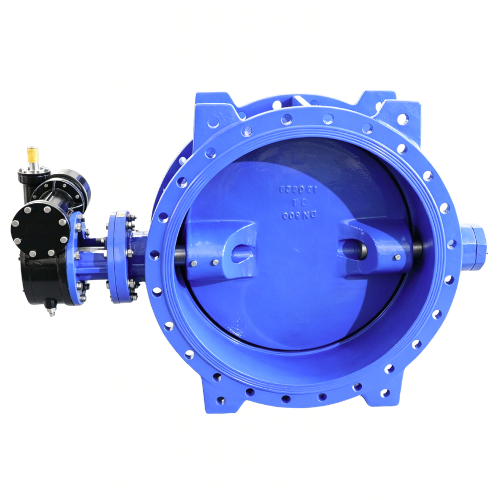
A double eccentric butterfly valve (also known as a double offset butterfly valve or high-performance butterfly valve) is a butterfly valve with two offsets built into the shaft and disc geometry that produce a cam action during operation. This cam action lifts the disc entirely free of the seat within the first 10 degrees of opening, eliminating the rubbing contact that causes seat wear in standard concentric butterfly valves.
1. What Does "Double Eccentric" Mean?
The term "double eccentric" refers to the two intentional offsets in the valve's shaft and disc geometry. These offsets are measured from the pipe centerline and the seat sealing plane.
1.1 First Eccentric (Offset 1) – Shaft Behind Seat Plane
The valve shaft (stem axis) is positioned behind the seat sealing plane — that is, offset toward the downstream side of the valve. This offset causes the disc to move axially away from the seat as the valve begins to open, breaking the seal with minimal friction.
- Effect: The disc lifts off the seat in the axial direction during the first few degrees of rotation
- Benefit: Reduces the torque required to unseat the disc and eliminates the initial friction peak common in concentric valves
1.2 Second Eccentric (Offset 2) – Shaft Offset from Pipe Centerline
The valve shaft is also offset from the vertical pipe centerline (offset toward one side of the bore). This second offset causes the disc to move radially away from the seat as rotation continues.
- Effect: After the disc lifts axially from the seat, continued rotation moves the disc edge radially clear of the seat
- Benefit: Complete clearance between disc and seat after approximately 10 degrees of opening — zero contact for the remaining 80 degrees of rotation
This dual-offset cam mechanism makes the butterfly disc separate from the rubber seat immediately once the valve opens, eliminating continuous scraping friction between disc and seat during rotation. The double flanged double eccentric butterfly valve from Laxu Valve is a mature mass-production version compliant with global water & industrial standards, covering DN100–DN1800 sizes for PN10, PN16, PN25 pressure ratings.
3. Key Product Features & Advantages
3.1 Zero Leakage Sealing Performance
- NBR / EPDM elastic seat mechanically locked on the disc via ductile iron retainer ring, bidirectional bubble-tight shut-off per API 598, EN 12266-1 test standards
- NSF61 & NSF372 certified NBR seat optional for potable drinking water pipeline systems, complying with international drinking water safety regulations
- Spherically machined stainless steel seat ring matches rubber sealing profile to maintain consistent tightness after thousands of open-close cycles.
3.2 Ultra-Low Operating Torque & Wide Actuation Compatibility
Double offset design cuts opening resistance significantly, supporting multiple actuation types:
- Standard manual gear operator with self-locking function, holds valve at any intermediate position without drifting
- Optional electric actuator (AC110V–220V wide voltage, 4–20mA analog signal feedback + SPDT limit switch position output)
- Pneumatic & hydraulic actuation available for automated industrial control systems
Actuator top flange follows ISO 5211 standard for universal drive mounting interchangeability.
3.3 Extended Service Life & Low Maintenance
- Minimal disc-seat friction reduces seat wear by over 60% vs concentric butterfly valves
- Disc seat is fully field replaceable without removing the whole valve from pipeline
- Self-lubricating bronze bushings isolate shaft from ductile iron body to reduce abrasion
- Fusion bonded epoxy (FBE) internal coating approved for drinking water, anti-corrosion for wastewater & desalination media.
3.4 Robust Safety Structure
- Dual protection: Adjustable mechanical hard stop + electrical travel limit switches to prevent over-torque damage to shaft & disc
- Thrust bearing balances axial force, allows valve installation in any pipeline orientation (horizontal, vertical)
- Two-piece shaft design minimizes fluid pressure drop at full open position, self-cleaning structure resists debris buildup in water pipelines.
3.5. Key Differences: Concentric vs Double Eccentric vs Triple Eccentric
Understanding the three categories of disc offset is essential for selecting the correct valve design for your service conditions.
| Feature |
Concentric (Zero Offset) |
Double Eccentric |
Triple Eccentric |
| API 609 Category |
Category A |
Category B |
Category C |
| Number of Offsets |
Zero (concentric) |
Two |
Three (adds conical seat angle) |
| Seat Contact During Rotation |
Full 90° rubbing contact |
Zero contact after 10° opening (cam action) |
Zero contact throughout full stroke (friction-free) |
| Seat Material |
Elastomer (EPDM, NBR, Viton) |
PTFE / R-PTFE / PEEK / Polymer |
Metal / Graphite laminate / Metal |
| Max Temperature |
90-150°C (elastomer limited) |
260°C (PEEK seat) |
500-800°C (metal seat) |
| Leakage Rate |
Bubble-tight (zero leakage) |
Bubble-tight (zero leakage) |
Bubble-tight (metal seat Class V/VI) |
| High Cycle Life |
50,000-100,000 cycles |
500,000+ cycles |
1,000,000+ cycles |
| Relative Cost |
Lowest |
Moderate (2-3x concentric) |
Highest (5-10x concentric) |
| Steam Service |
Not recommended |
Yes (up to 200°C saturated steam) |
Yes (high-temp superheated steam) |
4.1 Size & Pressure Range
- Nominal Diameter: DN100 ~ DN1800
- Pressure Class: PN10 (10 bar), PN16 (16 bar), PN25 (25 bar)
- Flange End Standard: EN1092-2, ISO7005-2, ANSI B16.1 Class 150LB, AWWA C207
- Face-to-Face Dimension: EN558-1 Series 14
- Design Standards: EN 593, API 609, BS EN 593
- Test Standards: API 598, ISO 5208, EN 12266-1
- Hydrostatic Test: Shell test 1.5× nominal pressure, seat leakage test 1.1× nominal pressure with zero leakage requirement.
4.2 Standard Material Configuration
| Component |
Standard Material |
Optional Upgrade |
| Valve Body |
Ductile Iron ASTM A536 Gr.65-45-12 (GGG40) |
Stainless Steel |
| Butterfly Disc |
Ductile Iron ASTM A536 Gr.65-45-12 |
CF8 / CF8M Stainless Steel |
| Upper & Lower Shaft |
Stainless Steel 2Cr13 (AISI420) |
17-4PH Stainless Steel |
| Seat Rubber |
EPDM (general water) / NSF61 NBR (drinking water) |
PTFE, metal hard seal |
| Bearing Bushing |
Self-lubricating Bronze |
Composite non-metallic bearing |
| Fasteners / Retainer Ring |
Stainless Steel 304 |
Stainless Steel 316 |
5. Advantages of Double Eccentric Butterfly Valves
- Extended seat life: The cam action eliminates seat rubbing, reducing seat wear by 80-90% compared to concentric valves in high-cycle applications. Service life of 500,000+ cycles is typical.
- Higher temperature capability: PTFE (200°C), R-PTFE (230°C), and PEEK (260°C) seats handle temperatures far beyond the 90-120°C limit of EPDM-rubber seated concentric valves.
- Chemical resistance: PTFE is chemically inert to virtually all industrial chemicals, allowing the valve to handle acids, caustics, solvents, and halogens that would rapidly destroy elastomer seats.
- Bi-directional bubble-tight shut-off: Achieves zero leakage in both flow directions at full rated pressure, meeting API 598 requirements.
- Low and consistent operating torque: The cam action eliminates the high breakaway torque peak characteristic of concentric valves. Operating torque remains consistent throughout the valve's life.
- Field-replaceable seat: Seat replacement takes 30-60 minutes without removing the valve from the pipeline. Contrast with concentric vulcanized seat valves that require complete valve replacement when the seat wears.
- Fire-safe design available: Optional API 607 fire-safe certification with secondary metal seat for hydrocarbon service.
6. Frequently Asked Questions
Q1: What is the difference between double eccentric and concentric butterfly valve?
Concentric butterfly valve disc contacts the seat during the whole opening process, causing heavy friction and short service life, only suitable for low-pressure small-size pipelines. Double eccentric valve disc separates from seat instantly when opening, low torque, zero leakage, fit PN10/16/25 large-diameter water industrial systems.
Q2: Can NBR seat double eccentric butterfly valve be used for drinking water?
Yes. Drinking water grade peroxide cured NBR rubber with NSF61 & NSF372 dual certification is available, fully compliant with North American potable water project standards, no harmful heavy metal precipitation.
Q3: What signal output does electric double eccentric butterfly valve support?
Electric actuator matches standard industrial signal head: 4–20mA DC analog valve position feedback (0%–100% opening display) + SPDT dry contact limit switches for full open / full closed remote signal transmission, compatible with PLC & DCS control systems.
Q4: What actuation options are available for DN100–DN1800 double eccentric butterfly valve?
Manual gear wheel, electric actuator (AC85–264V wide voltage), pneumatic actuator, hydraulic actuator are all optional, ISO5211 top flange ensures interchangeable drive replacement.
Contact Laux Valve
For pricing, technical datasheets, dimensional drawings, or engineering assistance selecting the right double eccentric butterfly valve for your application:
Email: james@lauxvalve.com | Tel: +86 18920833829 | Website: lauxvalve.com


